
Veils through the decades
In short
Veils have changed with fashion. The 1920s and 1930s favoured Juliet caps, the 1940s short veils and hats, the 1950s short, full veils, and the 1960s tall, voluminous ones. By the 1970s large hats had mostly taken over.
Just like wedding gowns, veils have changed remarkably over the decades. We thought it might be quite fun to see these changes so here's just a brief outline from the 1920s to the 1970s on how much they've changed:
1920s: the Juliet cap
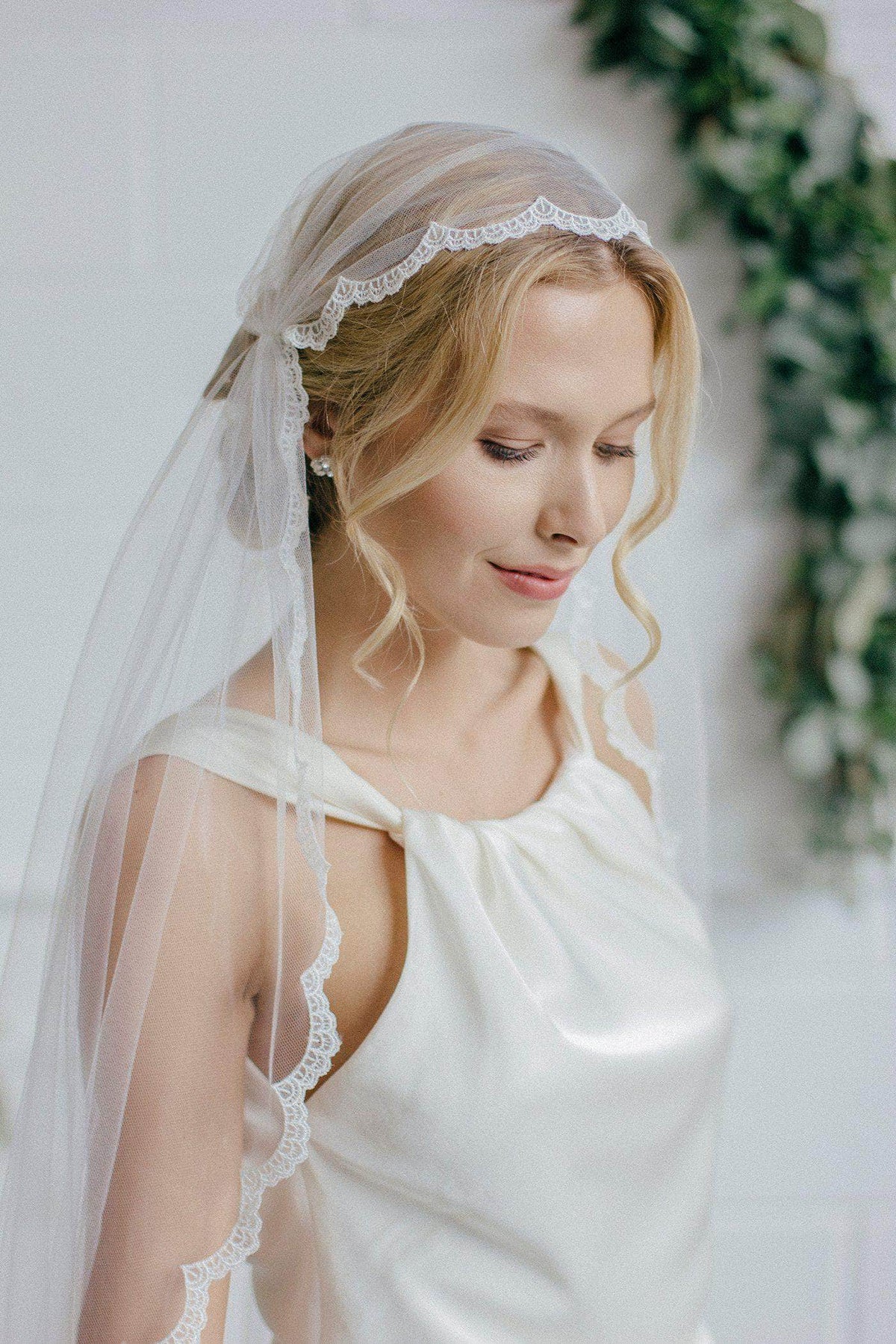
Let's start with veils from the 1920s. Veils from this era were long statement accessories that were often edged with ornate beading and/or intricate lace. Short bob hairstyles were all the rage and the Juliet Cap veil evolved as a veil that particularly complemented this style. A Juliet Cap veil was often worn with shorter highly decorated drop waist flapper gowns with the whole outfit finished off with a large, almost over the top, bouquet of flowers.
1930s: sleeker and simpler
The Juliet Cap veil continued to be popular through the 1930s, however it became much more refined. Both the wedding gown and the veil became much sleeker and more fitted. There was less emphasis on the heavy lace and beaded finishes, brides tended to choose fewer smaller embellishments if any. Veils tended to be much daintier, with a lot less gathering of the tulle.
1940s: short veils and hats

The 1940s saw a dramatic change to every aspect of a wedding. The war made it much harder to source any luxury fabrics required to make wedding gowns and veils. Marriages around this time were often rushed which meant women did not have time to prepare for a wedding and would choose to wear their best dress and hat. If a bride was in any position at all to wear a veil, it was often a lot shorter, however in most cases, a small birdcage veil was attached to their favourite hat.
1950s: short and full

Veils after the war made a comeback but the shorter style was still a very popular choice. The fashion in the 1950s liked to emphasise tiny waists with very fitted bodices and large skirts, and the shorter veil would highlight a tiny waist even further. The veil was often full of volume and worn high on top of a bride's head.
1960s: volume and height
Individual style was very important in the 1960s, the more unique and unusual the better. Beehives, amongst many other unusual hairstyles were all the rage, and a veil often had to balance out this statement look. Again, these veils were secured high on a brides head. Veils from this decade were again full of volume, and not often embellished with lace.
1970s: hats and Juliet caps
And finally, veils in the 1970s were done away with altogether. Large brimmed hats appeared to be the popular choice amongst brides, however, the few that did choose to wear a veil tended to go for something like the Juliet Cap veil, favouring the long flow boho feel that this style of veil can create!
 The collection Wedding Veils See the collection


